
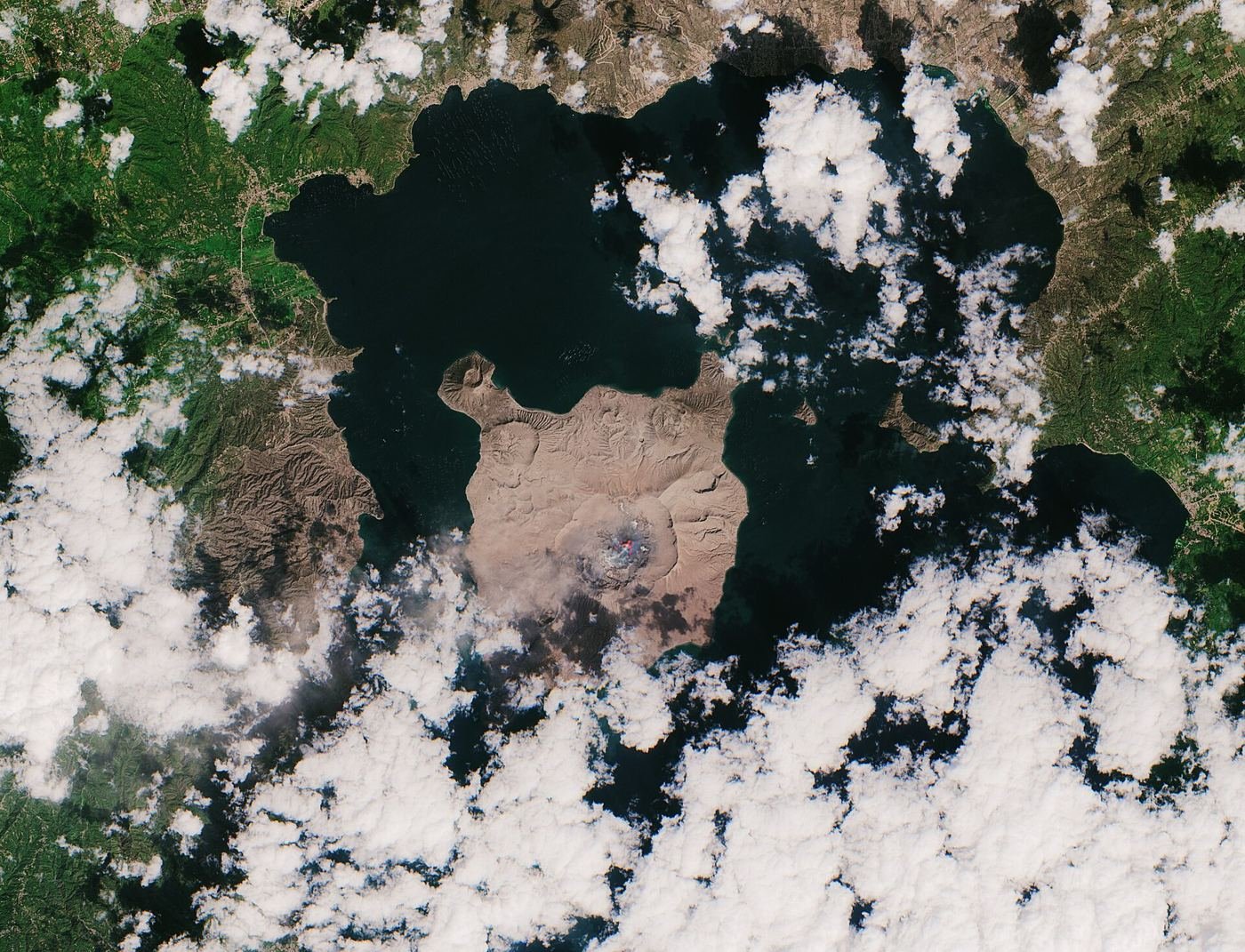
Volcanoes rarely erupt without warning, but their signals are subtle and easily missed. Long before ash rises into the sky, the ground above a restless volcano may swell by a few centimetres as molten rock gathers below. Gases escaping from vents change in composition, and clusters of tiny earthquakes ripple through the rock as it cracks under pressure. Monitoring teams combine all three clues, using satellite measurements of ground movement, instruments that sample gas, and seismometers listening day and night. No single signal is trusted on its own. Together, they build a picture that helps scientists judge whether unrest is fading or slowly building towards an eruption. Around the world’s most closely watched volcanoes, monitoring networks have grown steadily denser. Solar-powered instruments cling to crater rims, transmitting measurements through storms and ash that would quickly defeat manual checks. Schools in nearby towns use the same public data in science lessons, so children grow up understanding their landscape rather than simply fearing it.
What the Evidence Shows
The hardest part of volcano watching is turning measurements into decisions that protect people without causing needless alarm. Alert levels are therefore explained in plain language, and communities living near volcanoes practise evacuation routes so that instructions feel familiar if they ever come. Drones now sample gases in places too dangerous for people, while satellites revisit the same summit often enough to reveal steady patterns of change. Historical records matter as well, because each volcano has its own habits. By comparing today’s unrest with past behaviour, scientists can give emergency planners a clearer sense of what might happen next and how much time they may have. International cooperation strengthens the work further. Teams share software, training and hard-won experience from eruptions on other continents, because a pattern recognised in one place may save time in another. Satellites operated by different countries pass over the same volcanoes, filling gaps when local instruments fail. The goal is never a dramatic prediction with a date attached. Reporting and analysis from sources such as NASA track the same developments, and specialists following volcano monitoring say the direction is now consistent across independent lines of evidence.
The Wider Context
Funding bodies are watching volcano monitoring closely because the work sits at the junction of basic curiosity and practical return. Grant panels increasingly ask for a path from discovery to application, while researchers push back that the most valuable uses of fundamental science are rarely the ones written into the original proposal. The tension is productive when both sides stay honest about timescales.
What Happens Next
The long view on volcano monitoring is that fields advance by accumulation rather than by single announcements. This result adds a solid, checkable piece to a structure many teams are building, and its authors have shared their data so the piece can be tested from every side. That is how the picture eventually becomes reliable enough to act on. You can follow related developments in our coverage of science.
It is also worth remembering how quickly the picture in this area has changed before. Positions that looked settled a few years ago have been revised as new data arrived, and the same humility is appropriate now. The strongest coverage of this subject, and the most useful advice, tends to come from sources that update their views openly when the facts move, rather than defending an earlier position long after it has stopped fitting the evidence available.
