

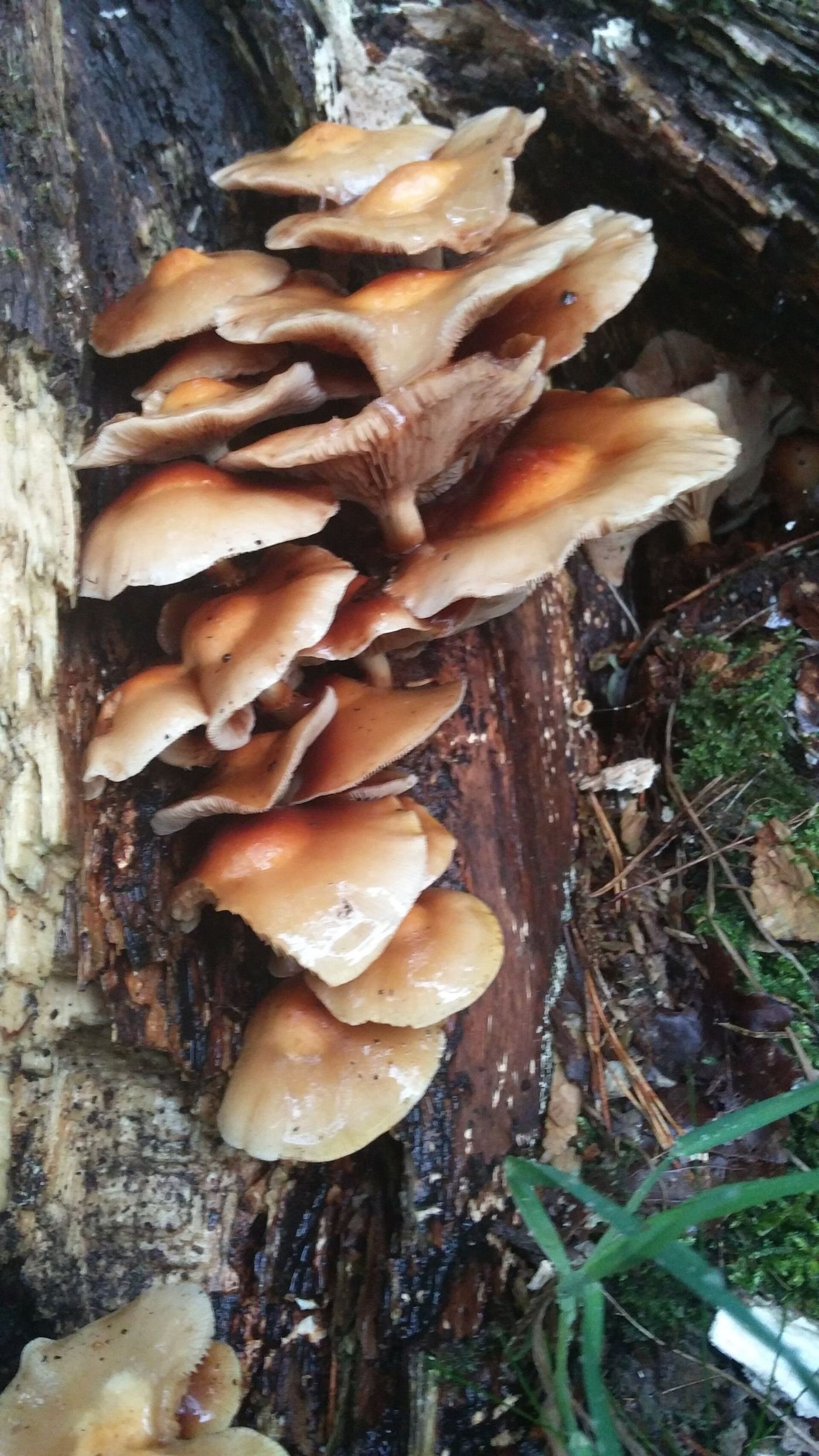
Beneath every forest floor lies a hidden network of fungal threads, finer than hair, that connects the roots of trees to one another. These mycorrhizal fungi trade with trees: the fungus supplies water and minerals drawn from the soil, and the tree pays in sugars made by photosynthesis. Through this network, sometimes called the wood wide web, nutrients and chemical signals can pass between trees, and young seedlings can tap into the resources of older neighbours. A single fungus can span hectares and live for centuries, making some fungi among the largest and oldest organisms on Earth. Without these partnerships, most trees would struggle to grow at all. One famous example in Oregon covers more than eight square kilometres, making it one of the largest living organisms ever found.
What the Evidence Shows
Researchers are still debating how much trees truly share through fungal networks, and how much the fungi simply farm their hosts for their own benefit. Some experiments suggest older trees pass carbon to shaded seedlings, while others find the exchange is far more limited than popular accounts claim. Either way, the networks matter for forestry and climate: healthy fungal communities help forests store carbon, resist drought and recover after fire or logging. Protecting old-growth forest preserves not only the trees but the ancient networks beneath them, which can take decades to rebuild once they are destroyed. Gardeners and farmers are beginning to use this knowledge, planting cover crops and avoiding deep ploughing so that fungal networks survive the winter and help the next crop grow. Reporting and analysis from sources such as Nature track the same developments, and specialists following the fungal networks linking forests underground say the direction is now consistent across independent lines of evidence.
The Wider Context
The wider context is a research landscape in which replication and open data now decide reputations. Findings connected to the fungal networks linking forests underground are being checked by independent groups with shared datasets, and the teams involved publish their methods in full so rivals can test every step. That discipline is slower than a headline cycle, but it is why results in this area increasingly survive first contact with scrutiny.
What Happens Next
What happens next in the story of the fungal networks linking forests underground will be decided by follow-up work already under way: larger samples, longer observation and instruments that have not yet come online. The researchers involved are unusually united on one point, that the current results justify the next investment of time and money. Readers will not have to wait long for the first tests of that claim. You can follow related developments in our coverage of science.
None of this will be settled by a single announcement, study or product launch. The pattern to watch is accumulation: independent confirmations, honest reporting of failures and steady improvement in the underlying numbers. Readers who follow those signals, rather than the loudest claim of the week, will understand this subject better than most of the commentary surrounding it suggests is possible.
